....sometimes these Christians really make me wonder.... Recently I came across this amusing article written by a guy named Jim Rutz - a quite proper name 'cause what he writes is what we call Rotz in german....
There's a slow poison out there that's severely damaging our children and threatening to tear apart our culture. The ironic part is, it's a "health food," one of our most popular.
Now, I'm a health-food guy, a fanatic who seldom allows anything into his kitchen unless it's organic. I state my bias here just so you'll know I'm not anti-health food.
The dangerous food I'm speaking of is soy. Soybean products are feminizing, and they're all over the place. You can hardly escape them anymore.
read full article
Showing posts with label Misc. Show all posts
Showing posts with label Misc. Show all posts
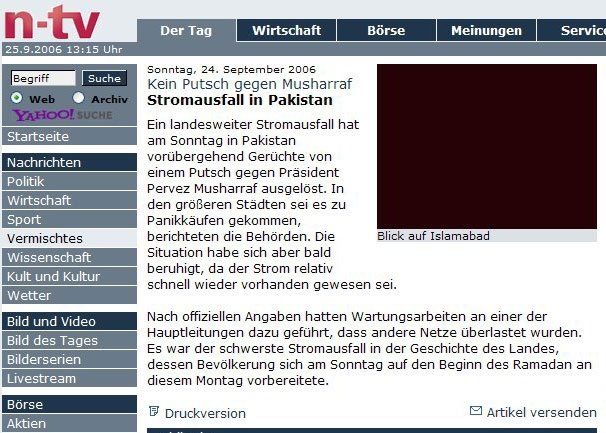
Medien-Foto des Jahres
Hier nun das Foto des Jahres....
Bin gerade auf der N-TV website auf einen Artikel getoßen der eigentlich gar nicht so besonders interessant ist - es geht um einen ziemlich heftigen Stomausfall in Pakistan. Das beigefügte Bild jedoch ist reif für einen Wurlitzer-Preis! In den Medien kursieren ja allerhand interessante Fotos - gefakte und authentische - dieses hier jedoch schlägt wirklich alles was ich in diesem Jahr bisher gesehen habe....

...übrigens: gestern ging ich nächtens spatzieren und entdeckte dabei das lange verschollen geglaubte Shambhala - hier nun exklusiv das allererste Foto:

Bin gerade auf der N-TV website auf einen Artikel getoßen der eigentlich gar nicht so besonders interessant ist - es geht um einen ziemlich heftigen Stomausfall in Pakistan. Das beigefügte Bild jedoch ist reif für einen Wurlitzer-Preis! In den Medien kursieren ja allerhand interessante Fotos - gefakte und authentische - dieses hier jedoch schlägt wirklich alles was ich in diesem Jahr bisher gesehen habe....
...übrigens: gestern ging ich nächtens spatzieren und entdeckte dabei das lange verschollen geglaubte Shambhala - hier nun exklusiv das allererste Foto:


Mani cravings
Google Earth is really full of strange and interesting pictures. Here's a picture with huge Om Mani Padme Hum cravings on a frozen lake in Tibet - the biggest is 170 by 75 meters (560 by 250 feet).

http://bbs.keyhole.com/ubb/download.php?Number=519806

http://bbs.keyhole.com/ubb/download.php?Number=519806
The cracked pot
I just came across a beautiful story at e-sangha, and I'd like to share it here....

An elderly Chinese woman had two large pots,each hung on the ends of a pole which she carried across her neck. One of the pots had a crack in it while the other pot was perfect and always delivered a full portion of water.
At the end of the long walk from the stream to the house, the cracked pot arrived only half full.
For a full two years this went on daily, with the woman bringing home only one and a half pots of water. Of course, the perfect pot was proud of its complishments. But the poor cracked pot was ashamed of its own imperfection, and miserable that it could only do half of what it had been made to do.
After two years of what it perceived to be a bitter failure, it spoke to the woman one day by the stream. "I am ashamed of myself, because this crack in my side causes water to leak out all the way back to your house."
The old woman smiled, "Did you notice that there are flowers on your side of the path, but not on the other pot's side?" "That's because I have always known about your flaw, so I planted flower seeds on your side of the path, and every day while we walk back, you water them."
"For two years I have been able to pick these beautiful flowers todecorate the table. Without you being just the way you are, there would not be this beauty to grace the house."
Each of us has our own unique flaw. But it's the cracks and flaws we each have that make our lives together so very interesting and rewarding.
You've just got to take each person for what they are and look for the good in them.
So, to all of my crackpot friends, have a great day and remember to smell the flowers on your side of the path.
e-sangha
Vladi & Georgy in St. Petersburg....
At a joint press conference held in Russia on Saturday with Bush and Putin a reporter had asked Bush how his conversation with Putin on "concerns about Russian democracy" had gone.
"I have shared with him my desires for our country, and he shared with me his desires for his," said Bush. "And I talked about my desire to promote institutional change in parts of the world like Iraq where there's a free press and free religion, and I told him that a lot of people in our country would hope that Russia would do the same thing."
"We certainly would not want to have the same kind of democracy as they have in Iraq, I will tell you quite honestly," Putin said through an interpreter, drawing audience laughter.
"Just wait," Bush responded....

"I have shared with him my desires for our country, and he shared with me his desires for his," said Bush. "And I talked about my desire to promote institutional change in parts of the world like Iraq where there's a free press and free religion, and I told him that a lot of people in our country would hope that Russia would do the same thing."
"We certainly would not want to have the same kind of democracy as they have in Iraq, I will tell you quite honestly," Putin said through an interpreter, drawing audience laughter.
"Just wait," Bush responded....

Om Mani Padme Hum
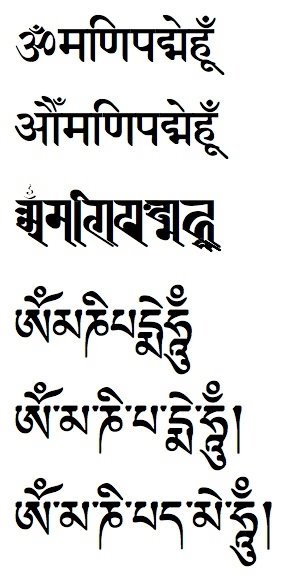
The mantra Om Mani Padme Hum is in the Sanskrit language. Sanskrit is a member of the Indo-European language family, and is distantly related to English. The Tibetan language is a member of the Sino-Tibetan family, and is distantly related to Chinese, but not at all to Sanskrit, though due to geographic proximity and religious/cultural influence, Tibetan has been heavily influenced by Sanskrit.
Sanskrit is most often written in the Devanagari script, which developed in north India about 1000 years ago, from ancestral scripts derived ultimately from the Brahmi script, which appears in the Emperor Ashoka's rock edicts of the 3rd century BCE. The Brahmi script was the ancestor of all the native scripts of south and southeast Asia, from Tibetan in the north, through the Indian subcontinent, Sri Lanka, Burma, Thailand, Laos, Cambodia, and numerous defunct scripts of pre-Muslim Indonesia.
Although Sanskrit is commonly written in Devanagari, technically it is not strictly identified with any specific script (as, say, the Greek language is with the Greek script), and can be, often has been, written in the various scripts of the cultures/nations for whom Sanskrit is a sacred language.
For instance, in south India Sanskrit is written in the local Tamil, Kannada and other scripts, in northeast India in the Bengali script, etc. And of course Western scholars write Sanskrit in an adapted Roman script which, though perhaps not "authentic", works as well as the various native Indian scripts.
The situation is similar for the Pali language, which is written in different scripts -- Sinhalese, Burmese, Thai, Roman -- by the various peoples who have preserved the Pali Scriptures.
And Sanskrit can be written in the Tibetan script, easily done since the Tibetan script was derived from a native Indian script which in its time was used to write Sanskrit. In fact much of the Mahayana scriptures we have today only because they were preserved in Tibet, having been lost in India. Because Sanskrit can be written in Tibetan script in an exact, letter-for-letter transcription, these preserved scriptures can fairly easily be restored to the original Sanskrit versions.
The Tibetan script was developed in the 7th century CE, and adapted from a northwest Indian script that was one of the ancestors of Devanagari. As with the adapted Arabic script used to write Persian (a totally unrelated language), the adapted Cyrillic used for Mongolian (ditto), and various other similar "accidents of history", the Tibetan script is not a very good fit for the language, as Tibetan is a very different kind of language than the Indian language(s) whose script was adapted to write Tibetan (which was not a written language previously).
The Om Mani Padme Hum mantra is commonly seen written in two scripts: Tibetan and Ranjana, the latter another of the ancestors of Devanagari which was commonly used in north and northwest India about a thousand years ago, and survives today as a "liturgical" script for Buddhist scriptures (commonly seen in old manuscripts of Mahayana sutras) as well as for the Newari language spoken (and written) by the semi-Tibetan Newar ethnic community in Nepal.
In the graphic above showing six versions of the mantra, the first line is written in Devanagari, for reference (though it won't usually be seen in this script), with the sacred syllable "Om" in the standard stylized version. The second line is also Devanagari, with "Aum" written out in standard letters. The third line is the Ranjana script (often seen in talismanic usages, painted or carved in varying versions on surfaces, jewelry, etc.), also known as Lantsa script. The fourth, fifth and sixth lines show how the mantra is written several ways in the Tibetan script, depending on whether it is treated as straight Sanskrit transliterated into Tibetan letters, or written as if it were a Tibetan sentence.
The first Tibetan-script version is simply Sanskrit written in Tibetan letters: the six syllables om ma ni pa dme hum directly corresponding to the syllables written in Devanagari and Ranjana. In the second, the syllables are still written in Sanskrit form, but they are separated by the Tibetan "tsek" syllable marker (the little dot between the letters); this is a kind of senseless hybrid, since Sanskrit doesn't require the syllable markers, though Tibetan does. The third version has been fully "Tibetanized", with the word "padme" divided into Tibetan-style rather than Sanskrit-style syllables, i.e. "pad-me" rather than "pa-dme": in fact the words are still Sanskrit, they haven't been actually translated into Tibetan (for instance, the Sanskrit "mani", "jewel", would be "norbu" in Tibetan), but they are written "as if" they were Tibetan.
It is due to this "Tibetanization" that the mantra's pronunciation in Tibet has changed from the Sanskrit "Om Mani Padme Hum" to "Om Mani Peme Hum" -- because in a native Tibetan word the syllable "pad" is pronounced (in the standard Lhasa dialect) "pe". ("Hum" is also often spelled "hung"; the sound at the end of the word is not actually either consonant, but a nasalization of the previous vowel, like the "n" in the French name "Jean".) The common Tibetan name Pema is a similar case, actually written "Padma" (the nominative form of the Sanskrit word for "lotus"; "padme" is the same word in a different case, indicating "in") but the "pad" syllable drops the final "d" and flattens the vowel.
Although Buddhist teaching, concepts and scriptures were thoroughly translated into Tibetan as Buddhism was imported into the country (over the course of several centuries), as noted above many Buddhist scriptures were also preserved by simply transposing the Sanskrit texts into Tibetan letters. Thus, when studying Tibetan Buddhism, one encounters material in both Tibetan and Sanskrit, all written in the Tibetan script. While terms like "buddha", "bodhi", "samsara" are usually written in Tibetan translation ("sangs rgyas", "byang chub", "khor ba") in Tibetan-language works, mantras and similar formulaic items are usually preserved in the original Sanskrit.
taken from http://www.lioncity.net/buddhism/index.php?showtopic=31212&hl=
English pronunciation guide for beginners
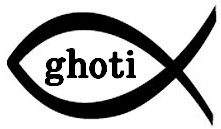 <- This is a "ghoti", pronounced as "fish" -
 "gh" as in "enough";
"o" as in "women", and
"ti" as in "nation"
 <- This is a "ghoughphtheightteeau", pronounced as "potato" -
 "gh" as in "hiccough";
"ough" as in "dough";
"phth" as in "phthisis";
"eigh" as in "neighbour";
"tte" as in "gazette", and
"eau" as in "plateau"
 <- This is a "tiogh",
 pronounced as "ship" -
"ti" as in "nation";
"o" as in "women", and
"gh" as in "hiccough"
....and if this way of spelling and pronouncing is too difficult for you, you can also adopt the following system which will make it much easier for you to pronounce english words:
A as in BREAD
B as in DEBT
C as in INDICTMENT
D as in HANDKERCHIEF
E as in GIVE
F as in HALFPENNY
G as in GNAW
H as in HOUR
I as in FRIEND
J as in MARIJUANA
K as in KNOW
L as in CALM
M as the first M in MNEMONIC
N as in AUTUMN
O as in PEOPLE
P as in PSALM
Q as in COLQUHOUN (a Scottish surname)
R as in FORECASTLE
S as in ISLAND
T as in CASTLE
U as in GUARD
V as in MILNGAVIE (a Scottish place name)
W as in WRONG
X as in SIOUX
Y as in PEPYS
Z as in RENDEZVOUS
Source
¿Tienes Miedo?
¿Tienes Miedo?
....siempre hay hombres ke tienen ke soportar más ;-)
I just came across a huge list of phobias - some of them are very strange, others are really funny - at least I had a good laugh about some of them, so I thought I'll share the funniest ones.... Here are my top 60 phobias (I'm really curious if there is anybody on this little planet who suffers from all of them....)
Acerophobia- Fear of sourness
Allodoxaphobia- Fear of opinions
Apeirophobia- Fear of infinity
Arachibutyrophobia- Fear of peanut butter sticking to the roof of the mouth
Asymmetriphobia- Fear of asymmetrical things
Bibliophobia- Fear of books
Cacophobia- Fear of ugliness
Cenophobia or Centophobia- Fear of new things or ideas
Chronophobia- Fear of time
Cibophobia- Fear of food (Sitophobia, Sitiophobia)
Cleptophobia- Fear of stealing
Consecotaleophobia- Fear of chopsticks
Coulrophobia- Fear of clowns
Dementophobia- Fear of insanity
Dikephobia- Fear of justice
Ecclesiophobia- Fear of church
Ecophobia- Fear of home
Ephebiphobia- Fear of teenagers
Ergophobie - Fear of work
Euphobia- Fear of hearing good news
Geliophobia- Fear of laughter
Geniophobia- Fear of chins
Genuphobia- Fear of knees
Gnosiophobia- Fear of knowledge
Hagiophobia- Fear of saints or holy things
Hedonophobia- Fear of feeling pleasure
Homilophobia- Fear of sermons
Hygrophobia- Fear of liquids, dampness, or moisture
Ideophobia- Fear of ideas
Kathisophobia- Fear of sitting down
Kinetophobia or Kinesophobia- Fear of movement or motion
Mageirocophobia- Fear of cooking
Maniaphobia- Fear of insanity
Mechanophobia- Fear of machines
Megalophobia- Fear of large things
Metrophobia- Fear or hatred of poetry
Neopharmaphobia- Fear of new drugs
Neophobia- Fear of anything new
Novercaphobia- Fear of your step-mother
Ommetaphobia or Ommatophobia- Fear of eyes
Optophobia- Fear of opening one's eyes
Ouranophobia or Uranophobia- Fear of heaven
Panophobia or Pantophobia- Fear of everything
Philosophobia- Fear of philosophy
Pogonophobia- Fear of beards
Polyphobia- Fear of many things
Proctophobia- Fear of rectums
Psychophobia- Fear of mind
Sesquipedalophobia- Fear of long words
Siderophobia- Fear of stars
Sophophobia- Fear of learning
Stasibasiphobia or Stasiphobia- Fear of standing or walking
Staurophobia- Fear of crosses or the crucifix
Symbolophobia- Fear of symbolism
Symmetrophobia- Fear of symmetry
Tapinophobia- Fear of being contagious
Teutophobia- Fear of German or German things
Uranophobia or Ouranophobia- Fear of heaven
Verbophobia- Fear of words
Xenophobia- Fear of strangers or foreigners
Source: phobialist.com
....siempre hay hombres ke tienen ke soportar más ;-)
I just came across a huge list of phobias - some of them are very strange, others are really funny - at least I had a good laugh about some of them, so I thought I'll share the funniest ones.... Here are my top 60 phobias (I'm really curious if there is anybody on this little planet who suffers from all of them....)
Acerophobia- Fear of sourness
Allodoxaphobia- Fear of opinions
Apeirophobia- Fear of infinity
Arachibutyrophobia- Fear of peanut butter sticking to the roof of the mouth
Asymmetriphobia- Fear of asymmetrical things
Bibliophobia- Fear of books
Cacophobia- Fear of ugliness
Cenophobia or Centophobia- Fear of new things or ideas
Chronophobia- Fear of time
Cibophobia- Fear of food (Sitophobia, Sitiophobia)
Cleptophobia- Fear of stealing
Consecotaleophobia- Fear of chopsticks
Coulrophobia- Fear of clowns
Dementophobia- Fear of insanity
Dikephobia- Fear of justice
Ecclesiophobia- Fear of church
Ecophobia- Fear of home
Ephebiphobia- Fear of teenagers
Ergophobie - Fear of work
Euphobia- Fear of hearing good news
Geliophobia- Fear of laughter
Geniophobia- Fear of chins
Genuphobia- Fear of knees
Gnosiophobia- Fear of knowledge
Hagiophobia- Fear of saints or holy things
Hedonophobia- Fear of feeling pleasure
Homilophobia- Fear of sermons
Hygrophobia- Fear of liquids, dampness, or moisture
Ideophobia- Fear of ideas
Kathisophobia- Fear of sitting down
Kinetophobia or Kinesophobia- Fear of movement or motion
Mageirocophobia- Fear of cooking
Maniaphobia- Fear of insanity
Mechanophobia- Fear of machines
Megalophobia- Fear of large things
Metrophobia- Fear or hatred of poetry
Neopharmaphobia- Fear of new drugs
Neophobia- Fear of anything new
Novercaphobia- Fear of your step-mother
Ommetaphobia or Ommatophobia- Fear of eyes
Optophobia- Fear of opening one's eyes
Ouranophobia or Uranophobia- Fear of heaven
Panophobia or Pantophobia- Fear of everything
Philosophobia- Fear of philosophy
Pogonophobia- Fear of beards
Polyphobia- Fear of many things
Proctophobia- Fear of rectums
Psychophobia- Fear of mind
Sesquipedalophobia- Fear of long words
Siderophobia- Fear of stars
Sophophobia- Fear of learning
Stasibasiphobia or Stasiphobia- Fear of standing or walking
Staurophobia- Fear of crosses or the crucifix
Symbolophobia- Fear of symbolism
Symmetrophobia- Fear of symmetry
Tapinophobia- Fear of being contagious
Teutophobia- Fear of German or German things
Uranophobia or Ouranophobia- Fear of heaven
Verbophobia- Fear of words
Xenophobia- Fear of strangers or foreigners
Source: phobialist.com
the Unitarian Jihad
Today I've joined the Unitarian Jihad:
My Unitarian Jihad Name is:
Brother Neutron Bomb of Love and Mercy.
Get yours.
Subscribe to:
Posts (Atom)