Showing posts with label Online Teachings. Show all posts
Showing posts with label Online Teachings. Show all posts
Google TechTalk with Matthieu Ricard
Change your mind, change your brain:
The inner conditions for authentic happiness
The inner conditions for authentic happiness


Lecture on the Ngakpa Tradition
 At his lecture last month at the Latse Library in New York City, Dr. Nida Chenagtsang, Director of the Ngak-Mang Institute (NMI) in Tibet, clearly enjoyed telling listeners that "Tibetan women are recognized as one the largest contributors to the Ngakpa tradition. . . Highest spiritual realization can be achieved by both men and women." Nida referred to this as "equal realization," and examined a host of other liberal beliefs and practices that typify the unique Buddhist tradition known as "Ngakpa."
With both lay and ordained representation in all five Tibetan Buddhist traditions, Nida presented Ngakpa as a non-sectarian tantric form of Buddhism with roots to Padmasambhava and the Siddha tradition of India. Touching on a bit of its history, philosophy, and practice, Nida conveyed a religious tradition that is at once both innovative and yet desperately in need of preservation.
 Dr. Nida Chenagtsang was born in the area of Rebkong, Tibet; a region known for centuries for its tradition of Ngakpas- Tibetan Yogis. He studied the local medical system, as well as intensive formal training at the Lhasa Tibetan Medical University. Later, he has practiced in various hospitals in Tibet, and has published many works on Traditional Tibetan Medicine. He has extensively researched ancient Tibetan medicinal treatments, specializing in the revival of external therapies, which has brought him high acclaim in the field of Tibetan Medicine in both the East and West.
Dr. Nida is Director of the International Academy for Traditional Tibetan Medicine (IATTM) and the Co-Founder of the International Ngak-Mang Institutes (NMI), established to preserve and maintain the Rebkong Ngakpa culture within modern Tibetan society. Recently he has been teaching comprehensive Tibetan Medicine courses all over the world.
Here you can download Dr. Nida Chenagtsang's lecture in MP3 format:
www.cbs.columbia.edu/weblog
Balancing the Heart and Mind
Balancing the Heart and Mind:
Practice of the Four Immeasurables and Shamatha Meditation
(December 10, 2006)
 The Jefferson Tibetan Society of Charlottesville, VA was pleased to host author, scholar and accomplished Buddhist practitioner Dr. Alan Wallace for a 2-day meditation retreat, Balancing the Heart and Mind: Practice of the Four Immeasurables and Shamatha Meditation.
B. Alan Wallace, Ph.D. is an internationally known meditation teacher, dynamic lecturer and scholar, one of the leading American translators, and on the forefront of Buddhism and Science research. He has been involved in the serious practice, study and translation of Buddhism for 35 years. He is one of the two primary translators to H.H. Dalai Lama for the Mind and Science conferences and research projects. His extensive books on Buddhism are helpful to people of the Vipassana and Zen traditions in addition to those of all the schools of Tibetan Buddhism. Alan has engaged in extensive retreats throughout his life, including numerous solitary retreats and was a co-teacher of a 1 year Shamatha retreat. He will be leading two 3-month Shamatha retreats in 2007 as part of the pioneering Shamatha Research project, a scientific study of the long-term effects of meditation on cognitive, attentional and affective functioning. He graduated summa cum laude from Amherst college, where he studied physics and the philosophy of science and has a Ph.D. in Religious Studies from Stanford University. He was a Buddhist monk for 14 years and has edited, translated and authored or contributed to more than 30 books on Buddhism, medicine, language, science and culture.
Here you can get some of his publications.
"We need to work with both the heart and mind, and their integrated cultivation is crucial to balanced spiritual practice." In this 2 day retreat on Balancing the Heart and Mind, Dr. Alan Wallace will focus on the cultivation of shamatha (meditative quiescence) and the Four Immeasurables (loving-kindness, compassion, empathetic joy and equanimity). His unique combination of traditional Buddhist knowledge and modern psychology allows him to present these topics in a way that is both vivid and at the same time analytic and profound. The retreat will include extensive instruction, silent meditation and guided meditations, interspersed with periods for group discussions, focused on the practical applications of these practices in daily life.
The Jefferson Tibetan Society's primary function is to provide teaching and meditation practice in the Tibetan Buddhist tradition, as exemplified by His Holiness the Dalai Lama's teachings. See avenue.org/jts for more information.
Teachings in MP3 & OGG Format:
archive.org/details/B_Alan_Wallace_Four_Immeasurables_Retreat
The Nectar of Manjushri's Speech

Audio Recordings from
Khenpo Sönam Tobden's Teachings
on
Khenpo Kunpal's commentary
'The Nectar of Manjushri's Speech'
on the Bodhicharyavatara
The recordings were made during Rigpa Shedra East 2006/2007 in Pharping / Nepal. Khenpo teaches in Tibetan. The recordings contain English translation by Gyurmé. The teachings on this commentary will finish beginning of April 2007, but there are already 100 hours of teaching MP3 online.
You can download all recordings at www.rigpawiki.org
Additional Study material
Andreas Kretschmar's translation of the first five chapters of Drops of Nectar, Khenpo Kunpal’s commentary on Shantideva’s Entering the Conduct of the Bodhisattvas is available as PDF at www.kunpal.com (free download, includes Tibetan of commentary as Wylie text)
The Padmakara Translation Group (French site) will publish a complete English translation of Khenpo Kunpal's commentary in November 2007: see Wisdom-books.
Teachings by Khentrul Rinpoche
Teachings by Khentrul Rinpoche
 About Khentrul Rinpoche
Khentrul Lodrö Thayé Rinpoche, acknowledged as a scholar of the highest level, has twice received the title of Khenpo (equivalent to a PHD of Philosophy). He taught for many years at monasteries in Tibet and India and is the abbot of Katog Mardo Tashi Choling in Eastern Tibet where he established a retreat center, library, shedra and is currently building a school for the children.
He directs the education and spiritual practice for over three hundred monks of whom there are seventy advanced-degree candidates, a hundred children, and twenty full time retreatants. He was invited to the USA in 2003 to start a program for studying Tibetan Buddhist philosophy and meditation in the traditional way (shedra). In addition, he continuously and tirelessly teaches throughout the country. Rinpoche’s style for presenting these profound and sacred teachings to western minds is phenomenal.
www.spiritualsurvivalsociety.org/Religious/Buddhist
Click here to download the full video
Compassion Without Limit
Part 1 of Dzogchen Pönlop Rinpoche's Teaching on Compassion Without Limit:
The Courageous Heart and Lojong Practice at Naropa University in Boulder, Colorado
(April 11, 2003)
All Parts
Teachings by Loppön Jigme Rinpoche
Here are some teachings by Loppön Jigme Thutop Namgyal Rinpoche entitled 'The Sound of Compassion'. These teachings are part of a series of twelve talks given by Rinpoche in spring of 2006 in San Anselmo, California, with the title 'The Wheel of Skillful Means and Wisdom'. I'm not sure if they're going to put all of these teachings online, but for now one can download two of these talks in MP3 format from Loppön Jigme Rinpoche's Blog.
The Sound of Compassion Part 1/2
The Sound of Compassion Part 2/2

Loppön Jigme Thutop Namgyal Rinpoche was born to Lama Sherab Dorje Rinpoche (of Repkong Monastery in Amdo, Tibet and the main disciple of His Holiness Dudjom Rinpoche), and to Pema Lhatso, (a T’hröma practitioner from Pema Kö, Tibet), on the 10th day of the first Tibetan month of the year of the Wood Snake in Orissa, India.
Rinpoche studied Tibetan philosophy, history, grammar, poetry, calligraphy and Sanskrit at the Tibetan Institute of Varanasi, India, where he received a BA in Tibetan philosophy. He completed one year of MA before he left to do retreat in Helambu. In 1992, Rinpoche was appointed to the position of Dorje Loppön for His Holiness Chatral Rinpoche. He received the entire Tersar tradition from His Holiness Dudjom Rinpoche, and from His Holiness Dilgo Khentse Rinpoche he received the entire Kama tradition, empowerment, oral transmission and teachings. From His Holiness Chatral Rinpoche, his own root guru, Rinpoche received the entire Longchen Nyingthig Tradition.
Rinpoche currently lives with his wife, Chris Iverson, in Marin County in the San Francisco bay area. They have four children, one girl and three boys.
The Sound of Compassion Part 1/2
The Sound of Compassion Part 2/2

Loppön Jigme Thutop Namgyal Rinpoche was born to Lama Sherab Dorje Rinpoche (of Repkong Monastery in Amdo, Tibet and the main disciple of His Holiness Dudjom Rinpoche), and to Pema Lhatso, (a T’hröma practitioner from Pema Kö, Tibet), on the 10th day of the first Tibetan month of the year of the Wood Snake in Orissa, India.
Rinpoche studied Tibetan philosophy, history, grammar, poetry, calligraphy and Sanskrit at the Tibetan Institute of Varanasi, India, where he received a BA in Tibetan philosophy. He completed one year of MA before he left to do retreat in Helambu. In 1992, Rinpoche was appointed to the position of Dorje Loppön for His Holiness Chatral Rinpoche. He received the entire Tersar tradition from His Holiness Dudjom Rinpoche, and from His Holiness Dilgo Khentse Rinpoche he received the entire Kama tradition, empowerment, oral transmission and teachings. From His Holiness Chatral Rinpoche, his own root guru, Rinpoche received the entire Longchen Nyingthig Tradition.
Rinpoche currently lives with his wife, Chris Iverson, in Marin County in the San Francisco bay area. They have four children, one girl and three boys.
Tentes - Some basic teachings
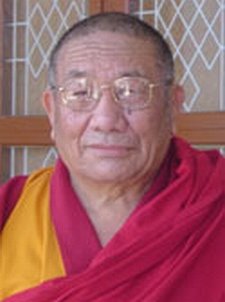
Everytime I search for Geshe Ngawang Dakpa at archive.org I come across more teachings and meanwhile there's a quite huge collection of talks available there. It seems to be a very good alternative to the meanwhile very controverse teachings by the Reverend, but I'm not really sophisticated enough to judge that.... Anyway, I just came across some very interesting teachings on the 4 tenets, and I'm looking forward to study the whole course over the winter time....
Buddhist Philosophy: Tenets
by Ven. Geshe Ngawang Dakpa
Tenets - Based on the idea that the Buddha taught different things to different people in line with their capacities, Tibetan scholars systematized the numerous trends in Indian Buddhist thought and taught the four schools of Tenets (Drubtha) as a means to approach the most profound philosophical teachings via more accessible levels. The text that is the basis for study of this subject gives a brief overview of the assertions on minds, objects, selflessness and the nature of attainment within each of the schools, culminating in the tenets of the most highly esteemed school, the Madhyamikas.
Teachings on the Vaibhashika School:
Vaibhashika Teachings Part 1
Vaibhashika Teachings Part 2
Vaibhashika Teachings Part 3
Vaibhashika Teachings Part 4
Vaibhashika Teachings Part 5
Vaibhashika Teachings Part 6
Vaibhashika Teachings Part 7
Vaibhashika Teachings Part 8
Vaibhashika Teachings Part 9
Teachings on the Sautrantika School:
Sautrantika Teachings Part 1
Sautrantika Teachings Part 2
Sautrantika Teachings Part 3
Sautrantika Teachings Part 4
Sautrantika Teachings Part 5
Sautrantika Teachings Part 6
Sautrantika Teachings Part 7
Sautrantika Teachings Part 8
Sautrantika Teachings Part 9
Teachings on the Chittamatra School:
Chittamatra Teachings Part 1
Chittamatra Teachings Part 2
Chittamatra Teachings Part 3
Chittamatra Teachings Part 4
Chittamatra Teachings Part 5
Chittamatra Teachings Part 6
Chittamatra Teachings Part 7
Chittamatra Teachings Part 8
Chittamatra Teachings Part 9
Chittamatra Teachings Part 10
Chittamatra Teachings Part 11
Chittamatra Teachings Part 12
Teachings on the Svatrantrika Madhyamika:
Svatantrika Teachings Part 1
Svatantrika Teachings Part 2
Svatantrika Teachings Part 3
Svatantrika Teachings Part 4
Svatantrika Teachings Part 5
Svatantrika Teachings Part 6
Svatantrika Teachings Part 7
Svatantrika Teachings Part 8
Teachings on the Prasangika Madhyamika:
Prasangika Teachings Part 1
Prasangika Teachings Part 2
Prasangika Teachings Part 3
Prasangika Teachings Part 4
Prasangika Teachings Part 5
Prasangika Teachings Part 6
Prasangika Teachings Part 7
Prasangika Teachings Part 8
Prasangika Teachings Part 9
Prasangika Teachings Part 10
Prasangika Teachings Part 11
Prasangika Teachings Part 12
Mind & Reality

WEBCAST:
Mind & Reality: A Multidisciplinary Symposium on Consciousness
February 25-26, 2006 — Columbia University
Building on past Columbia lectures such as Meditative and Contemplative States (2001), Destructive Emotions: Neuroscience, Psychology, and Buddhism (2003), and Tibetan Mind Science Meets Modern Neuroscience (2005), the Center for the Study of Science and Religion will host Mind & Reality: A Multidisciplinary Symposium on Consciousness this February 25th-26th in the historic rotunda of Low Memorial Library at Columbia University.
Supported by the John E. Fetzer Institute, this event is dedicated to enriching the dialogue between Buddhism, Hinduism, and contemporary consciousness studies. Recently the editors at the The Journal of Consciousness Studies warned of a “serious danger that the emerging multi-disciplinary field of consciousness studies could Balkanise and different groups of scholars will end up ‘circling the wagons’ and talking among themselves.” The overarching goal of this symposium is to cultivate communication between culturally diverse lines of thought and foster relationships between like-minded individuals.
Participants:
Georges B.J. Dreyfus, Jay Garfield, Thubten Jinpa, Anne Klein, Gareth Sparham, Robert A.F. Thurman, B. Alan Wallace, and many more....
www.columbia.edu/cu/cssr/mindandreality
....these are really interesting talks, however, I'm curious what Mr. John Lorber thinks about all that stuff - maybe they should have invited him as well....
Live Webcast of Buddhist Philosophy Class of LTWA

Phayul.com is now broadcasting teachings on Aryadeva's Four Hundred Verses on the Yogic Deeds of Bodhisattvas (Catuhshataka, bZhi rgya pa) with Ven. Geshe Sonam Rinchen.
The live webcasts are almost daily from 11 am to 12 pm (IST +5:30GMT). They are already broadcasting since last month, but one can download all previous talks as well.
Live Webcast of Buddhist Philosophy Class of LTWA
Garland of Views
 OM AH HUM VAJRA GURU PADMA SIDDHI HUM
Here are the rare and precious instructions on Padmasambhava's Garland of Views, given by H.H. XIV. Gyalwa Rinpoche in September 2004 at the Miami University:
Garland of Views (part 1)
Garland of Views (part 2)
Garland of Views (part 3)
Garland of Views (part 4)
(in Tibetan with English Translation by Geshe Thupten Jinpa)
The Heart of Mahamudra
Dzogchen Ponlop Rinpoche & The Heart of Mahamudra
 Recently I came across some very good and interesting audio recordings from Dzogchen Ponlop Rinpoche. The teachings are called "The Heart of Mahamudra" and were recorded in the Lhundup Lam-Rim Ling Center in Morelia, Michoacán, México. The talks are in english with spanish translations. Under the following links you can download them in Mp3 format directly from their website - and I guess they would be happy if you visit their site as well at dharmaentuidioma.com....
The Heart of Mahamudra, Day 1
The Heart of Mahamudra, Day 2
The Heart of Mahamudra, Day 3
The Heart of Mahamudra, Day 4 (1/2)
The Heart of Mahamudra, Day 4 (2/2)
The Heart of Mahamudra, Day 5
Sarva Mangalam!
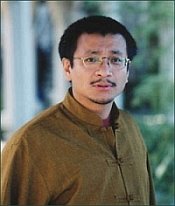 Recently I came across some very good and interesting audio recordings from Dzogchen Ponlop Rinpoche. The teachings are called "The Heart of Mahamudra" and were recorded in the Lhundup Lam-Rim Ling Center in Morelia, Michoacán, México. The talks are in english with spanish translations. Under the following links you can download them in Mp3 format directly from their website - and I guess they would be happy if you visit their site as well at dharmaentuidioma.com....
The Heart of Mahamudra, Day 1
The Heart of Mahamudra, Day 2
The Heart of Mahamudra, Day 3
The Heart of Mahamudra, Day 4 (1/2)
The Heart of Mahamudra, Day 4 (2/2)
The Heart of Mahamudra, Day 5
Sarva Mangalam!
Subscribe to:
Posts (Atom)